
Regulatory Compliance 2026: Practical Guide for Secure Organizations
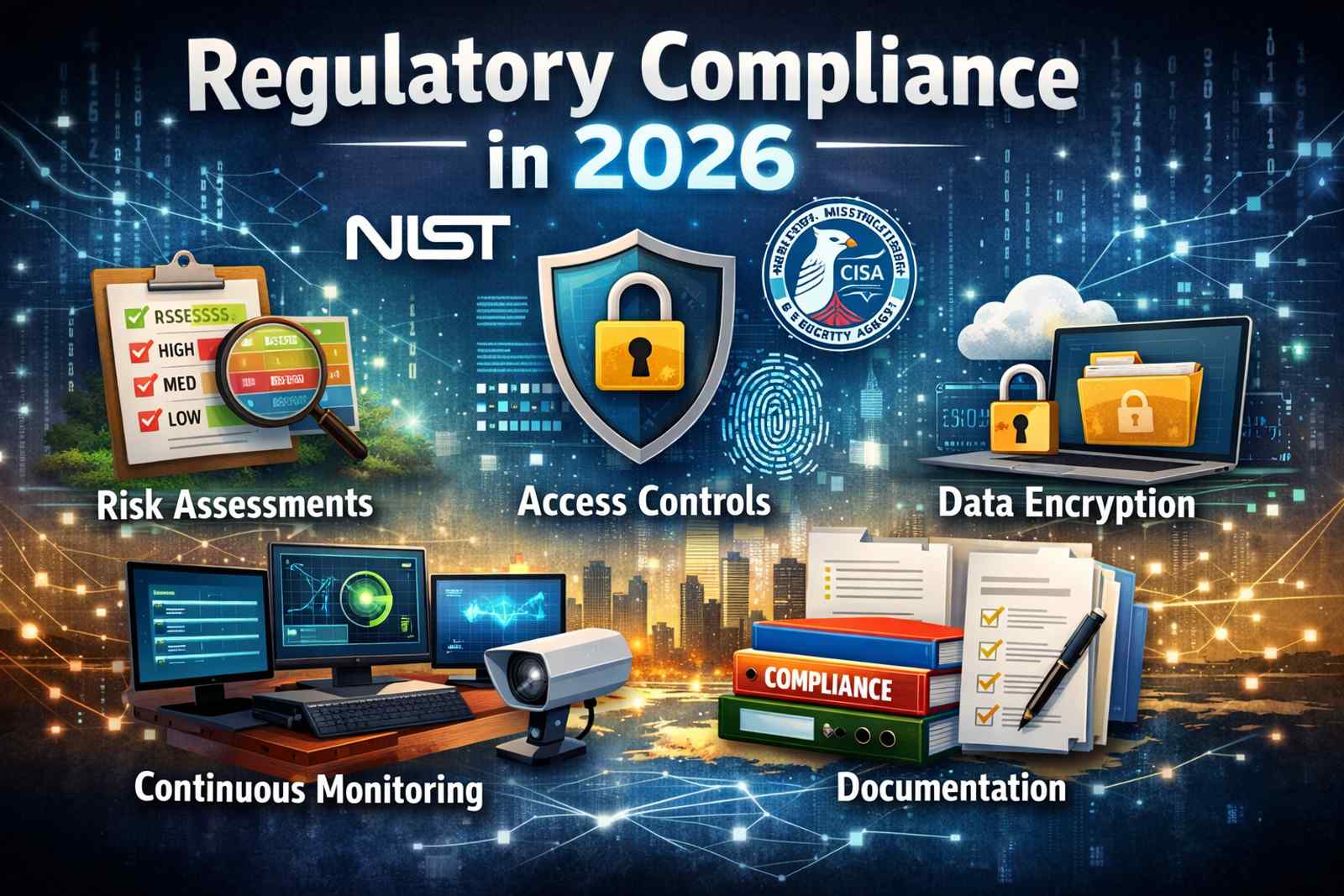
Regulatory compliance is no longer just a legal requirement.
In 2026, it is a business-critical function directly tied to cybersecurity, operational resilience, and executive accountability.
Organizations across healthcare, finance, government contracting, and enterprise markets must demonstrate that they are protecting sensitive data, managing risk, and maintaining documented security controls.
Compliance is not about checking boxes. It is about proving that your organization follows structured, defensible security practices aligned with recognized standards.
Quick Answer: What Are the Core Requirements for Regulatory Compliance?
Regulatory compliance requires:
- Documented risk assessments
- Role-based access controls
- Encryption and data protection standards
- Continuous monitoring and logging
- Incident response planning
- Workforce security training
- Vendor risk management
- Audit-ready documentation
Most modern compliance programs align with authoritative frameworks such as the National Institute of Standards and Technology Cybersecurity Framework.
Federal cybersecurity risk guidance from the Cybersecurity and Infrastructure Security Agency also shapes compliance expectations.
Compliance in 2026 Is Built on Recognized Security Frameworks
Modern regulatory compliance is grounded in structured cybersecurity models.
The NIST Cybersecurity Framework organizes security into five core functions:
- Identify
- Protect
- Detect
- Respond
- Recover
Organizations that align internal controls with this structure are better positioned to meet audit requirements and contractual obligations.
CISA further emphasizes proactive risk reduction and resilience planning across critical infrastructure and private sector environments.
Documented Risk Assessments Are the Foundation
Every major regulatory framework begins with risk identification and documentation.
According to NIST Special Publication 800-30, risk assessments must evaluate.
- Threat sources
- System vulnerabilities
- Likelihood of exploitation
- Business impact
- Mitigation strategies
A compliant organization must:
- Identify sensitive data and critical systems
- Assess internal and external threats
- Document risk treatment plans
- Review assessments annually or after significant changes
Without formal risk documentation, compliance cannot be demonstrated.
Access Controls and Identity Management
Regulatory frameworks require strict control over system and data access.
The NIST Digital Identity Guidelines provide technical guidance for authentication and identity management.
Compliance expectations typically include:
- Role-based access control
- Multi-factor authentication
- Least privilege enforcement
- Privileged account monitoring
- Immediate deprovisioning upon termination
Improper access control is one of the most common audit findings.
Data Protection and Encryption Standards
Sensitive data must be protected both at rest and in transit.
NIST’s Cryptographic Standards and Guidelines outline federally recognized encryption requirements.
Compliance programs must include:
- Encryption for sensitive data
- Secure communication protocols
- Data classification policies
- Backup and disaster recovery planning
- Secure data disposal procedures
Encryption key management must also be documented and controlled.
Continuous Monitoring and Logging
Compliance does not end once controls are implemented.
NIST Special Publication 800-137 defines Information Security Continuous Monitoring standards.
Organizations must implement:
- Security event monitoring systems
- Log collection and retention policies
- Intrusion detection or prevention solutions
- Regular review and documentation of alerts
Auditors often request monitoring evidence to verify ongoing oversight.
Incident Response Planning and Breach Preparedness
Organizations are expected to prepare for cyber incidents before they occur.
NIST Special Publication 800-61 outlines structured incident response guidance.
A compliant incident response program includes:
- A documented response plan
- Clearly defined internal roles
- Breach notification procedures
- Tabletop exercises and testing
- Post-incident documentation
- In regulated industries, failure to respond properly can result in significant penalties.
Security Awareness and Workforce Training
Human error remains a leading cause of breaches.
CISA identifies workforce training as a critical cybersecurity defense strategy.
Compliance requires:
- Ongoing employee security awareness training
- Phishing recognition education
- Clear incident reporting channels
- Documented proof of participation
Technology alone cannot satisfy compliance without informed employees.
Vendor and Third-Party Risk Management
Organizations are responsible for protecting data even when vendors handle it.
The Federal Trade Commission emphasizes vendor oversight in its data protection guidance for businesses.
Compliance programs should include:
- Vendor due diligence assessments
- Security requirement clauses in contracts
- Ongoing third-party monitoring
- Documented risk reviews
Third-party breaches frequently trigger regulatory enforcement actions.
Documentation Determines Audit Success
Strong security controls without documentation do not equal compliance.
Organizations must maintain:
- Written policies and procedures
- Risk assessment records
- Change management logs
- Access review documentation
- Incident response records
- Training logs
- Audit trails
If a control is not documented, it cannot be defended during an audit.
Signs Your Organization May Have Compliance Gaps
You may have regulatory exposure if:
- Your risk assessment is outdated
- Policies do not reflect current systems
- AI or cloud tools lack governance controls
- Incident response plans are untested
- Vendor security reviews are informal
- Monitoring is inconsistent or undocumented
These issues often remain invisible until an audit or breach reveals them.
How TechGuard Helps Organizations Meet Regulatory Requirements
TechGuard supports organizations that need structured, defensible compliance programs aligned with recognized cybersecurity frameworks.
Our services include:
- Comprehensive risk assessments
- Compliance gap analysis
- Policy development and documentation support
- Access control and monitoring implementation guidance
- Incident response planning and testing
- Vendor risk management
- Audit preparation assistance
Learn more about TechGuard’s cybersecurity and compliance services.
Ready to Strengthen Your Compliance Strategy in 2026?
Regulatory compliance is an ongoing commitment to risk management, operational discipline, and documentation integrity.
Organizations that align with established standards like NIST and CISA guidance are better prepared for audits, contracts, and emerging threats.
Contact TechGuard to schedule a compliance readiness consultation.
FAQ: Regulatory Compliance Requirements
How often should risk assessments be performed?
At minimum annually, and whenever significant operational or technology changes occur.
Are NIST standards mandatory?
They are not always legally required, but they are widely adopted and frequently referenced in federal contracts and industry regulations.
Does AI adoption increase compliance requirements?
AI tools must follow the same data protection, access control, and documentation standards as any other enterprise system.
What happens if an organization fails a compliance audit?
Consequences may include fines, remediation mandates, contract loss, or reputational damage depending on the regulatory framework involved.